Shizu Hamono
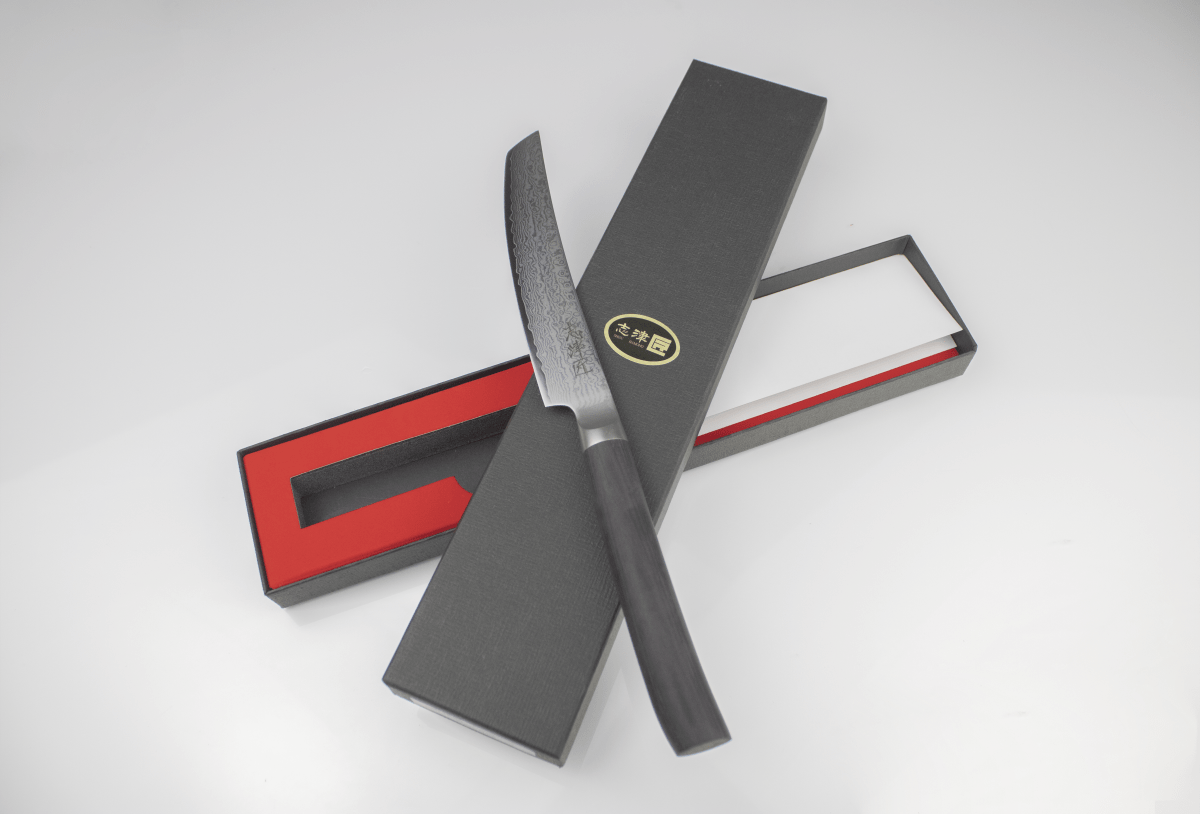
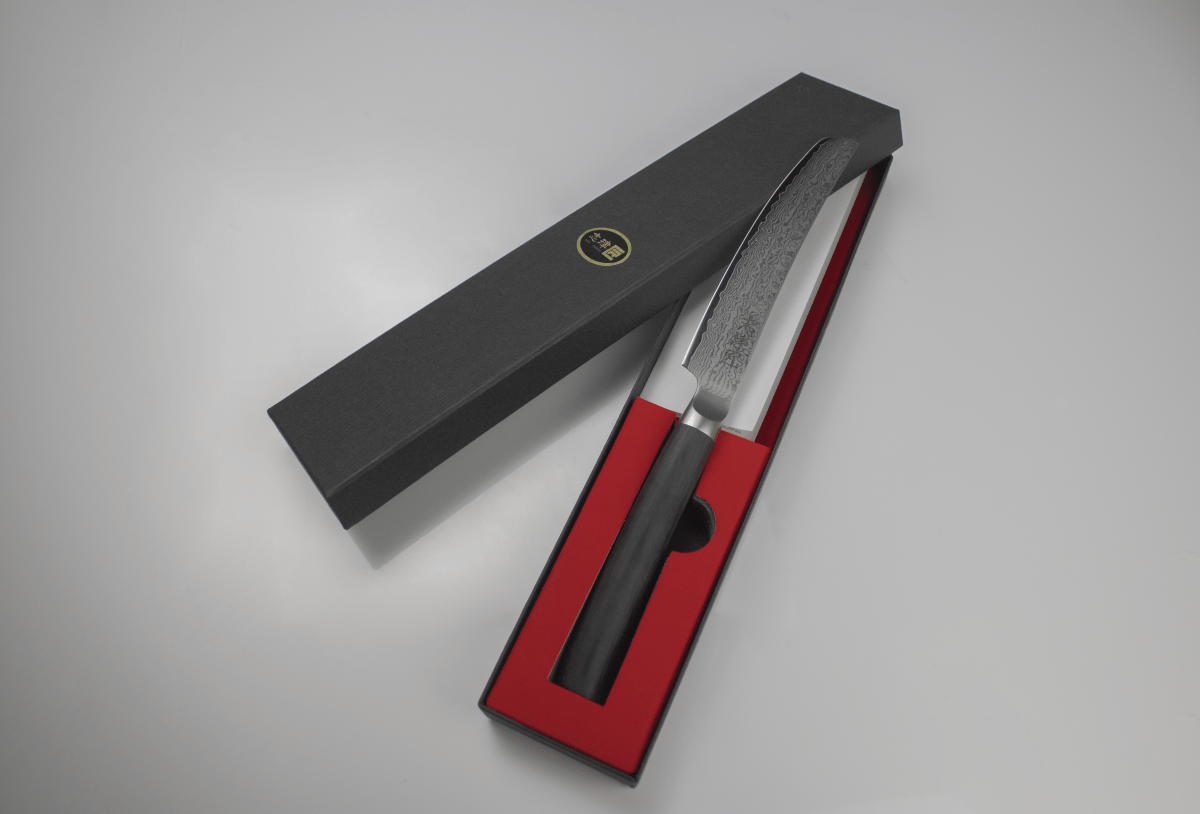
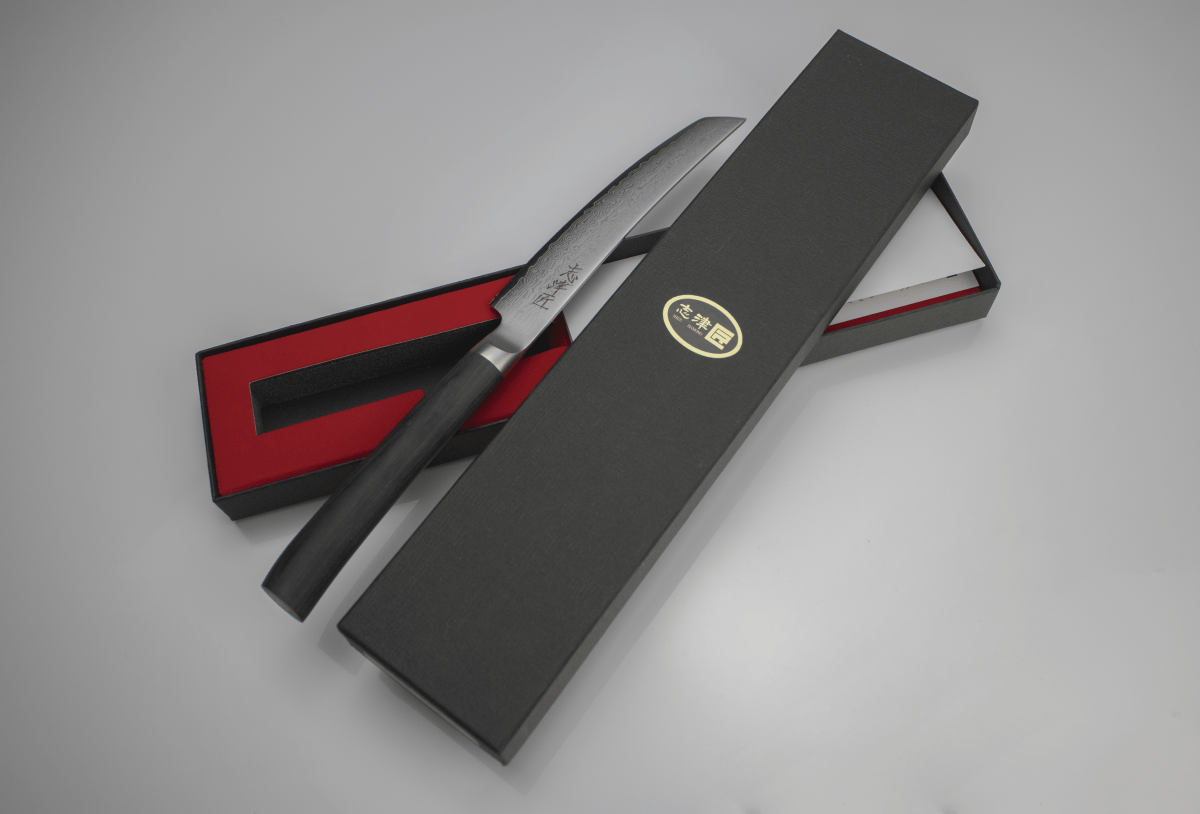
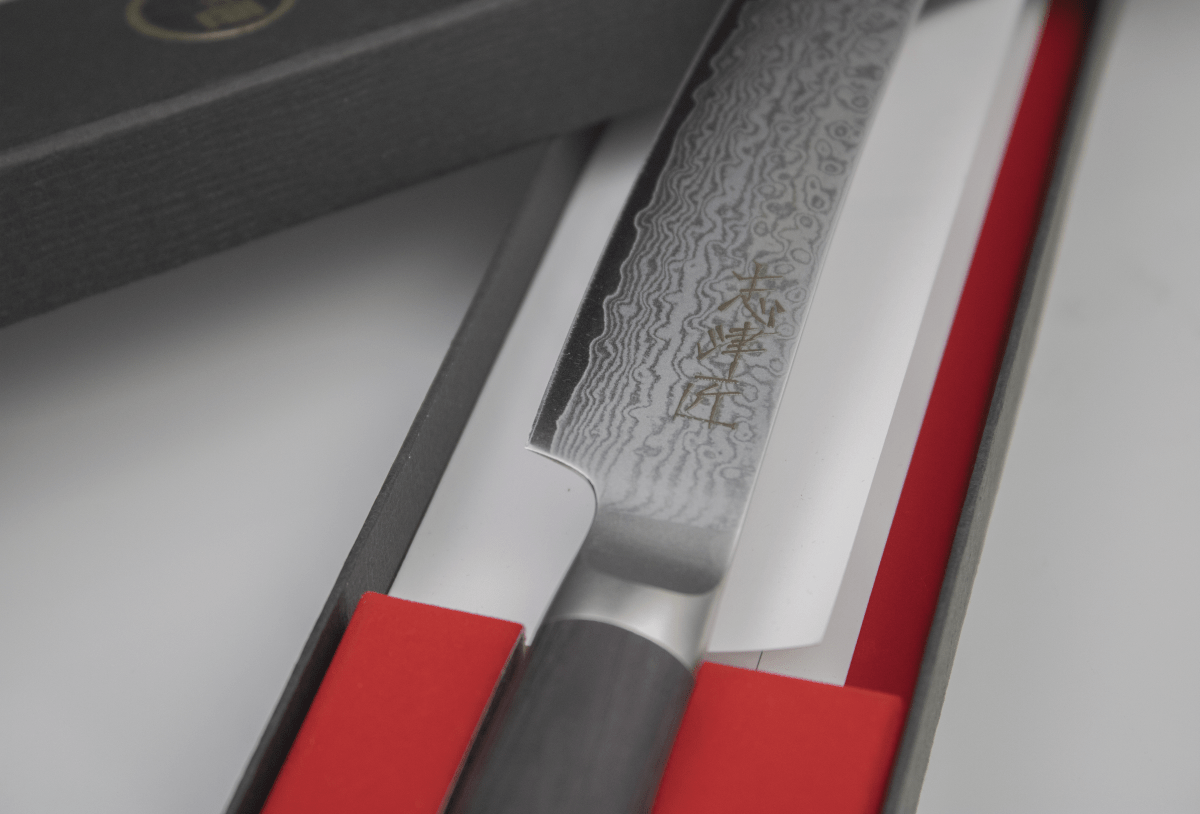
The Shizu steak knife features a stunning Damascus blade and a Japanese-style handle with a smooth curve, offering a unique and elegant design. Unlike typical western steak knives, the blade of the Shizu knife is known for its exceptional sharpness and quality. The handle of the knife is designed with embedded metal to provide optimal weight balance for a comfortable grip.
The name “Shizu” pays homage to the Master Craftsman Saburo Sizu from the Edo period, who hailed from Seki City – renowned as the City of Blacksmiths. Seki blades are esteemed for their strength, durability, and precision cutting capabilities. In 1959, Masami Horibe, a skilled craftsman in Seki, began producing high-quality knives for export, quickly earning a reputation for his superior craftsmanship. By the 1990s, the company had evolved into Sizutech, with the establishment of the Shizu Hamono office to continue the legacy of fine knife-making craftsmanship.
Shizu Hamono offers a range of blade shapes, such as gyuto (chef’s knife), santoku, nakiri (vegetable knife), petty (utility knife), and more, each designed for specific kitchen tasks. The handles of Shizu Hamono knives are crafted from durable materials like pakka wood or micarta. The edge angle of each knife type varies accordingly. These knives are meticulously handcrafted by skilled artisans in Seki City, a renowned knife-making center in Japan, showcasing the legacy of centuries-old techniques in their work.
Seki is a city located in Gifu Prefecture, Japan. It is known as the “City of Blades” due to its long history of sword making and cutlery production. Seki has been a center for traditional Japanese swordsmithing for over 700 years, and it is famous for producing high-quality knives, scissors, and other blades. Seki is also home to several museums and cultural sites, including the Seki Cutlery Museum, where visitors can learn about the history and craftsmanship of Japanese blades. The city holds various festivals throughout the year, showcasing traditional arts, crafts, and performances.
Damascus steel is the forged steel used for the blades of swords. It originated in the Near East, where it was crafted from ingots of carbon steel imported from Southern India or produced in centers such as Sri Lanka or Khorasan, Iran. These swords are known for their distinctive patterns of banding and mottling, resembling flowing water, sometimes forming a “ladder” or “rose” pattern. Damascus steel blades were renowned for their toughness, resistance to shattering, and ability to be honed to a sharp, resilient edge.